Give Each Light Source a Job
A glowing mirror can be the visual focus of a bathroom, but it should not be asked to solve every lighting need. Start by separating the jobs: general light for moving safely through the room, face-level light at the vanity, and low-level or decorative light for atmosphere. Once those roles are clear, the mirror can be judged as part of a system instead of as an isolated bright object in a dark showroom.
This matters in purchasing because two mirrors photographed at different exposure settings can appear to have very different output. A useful comparison uses the same room, wall finish and surrounding lights. For projects, request a sample and review it in a mock-up that resembles the final bathroom.
Coordinate Color Appearance, Not Just a Number
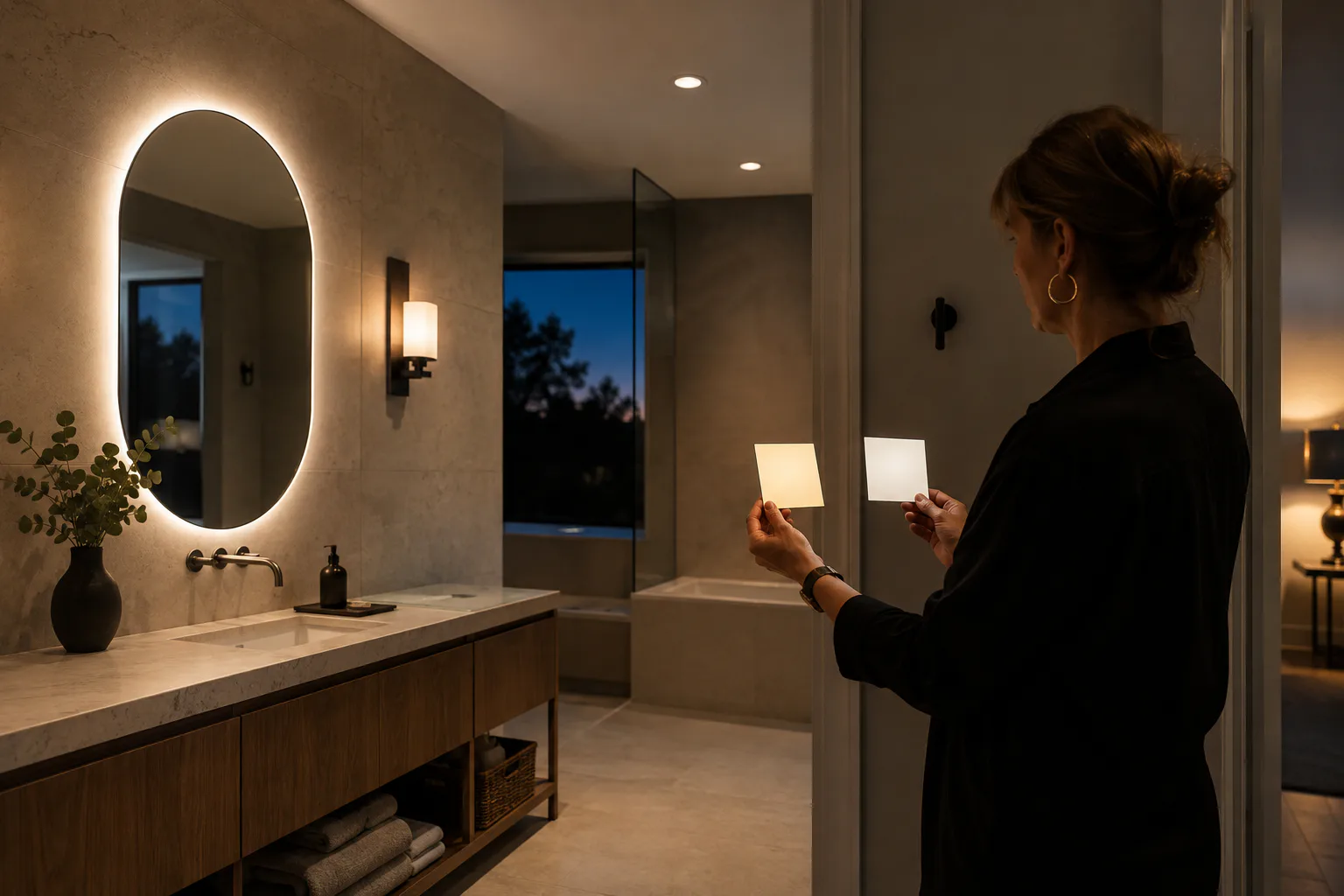
A project team will often specify a light color, but the visible result also depends on wall tile, paint, timber, metal finishes and the other fixtures in the room. Warm stone can look flat beside very cool light; strongly colored surfaces can change the light reflected onto a face. Review the mirror with the actual finish samples and with the ceiling or wall lights switched on.
If the project uses more than one light setting, agree which setting is used for normal operation and photography. The purchase schedule should describe the agreed configuration in plain language so that the sample approval can be checked against the production order.
Watch the Face, Wall and Reflection
Stand where a guest or homeowner will stand, then look for three different effects. First, is the face readable without harsh shadow? Second, is the wall glow even enough for the intended design? Third, does the mirror reflect a ceiling fitting or bright window in a distracting position? These questions are more useful than judging the mirror from the bathroom doorway.
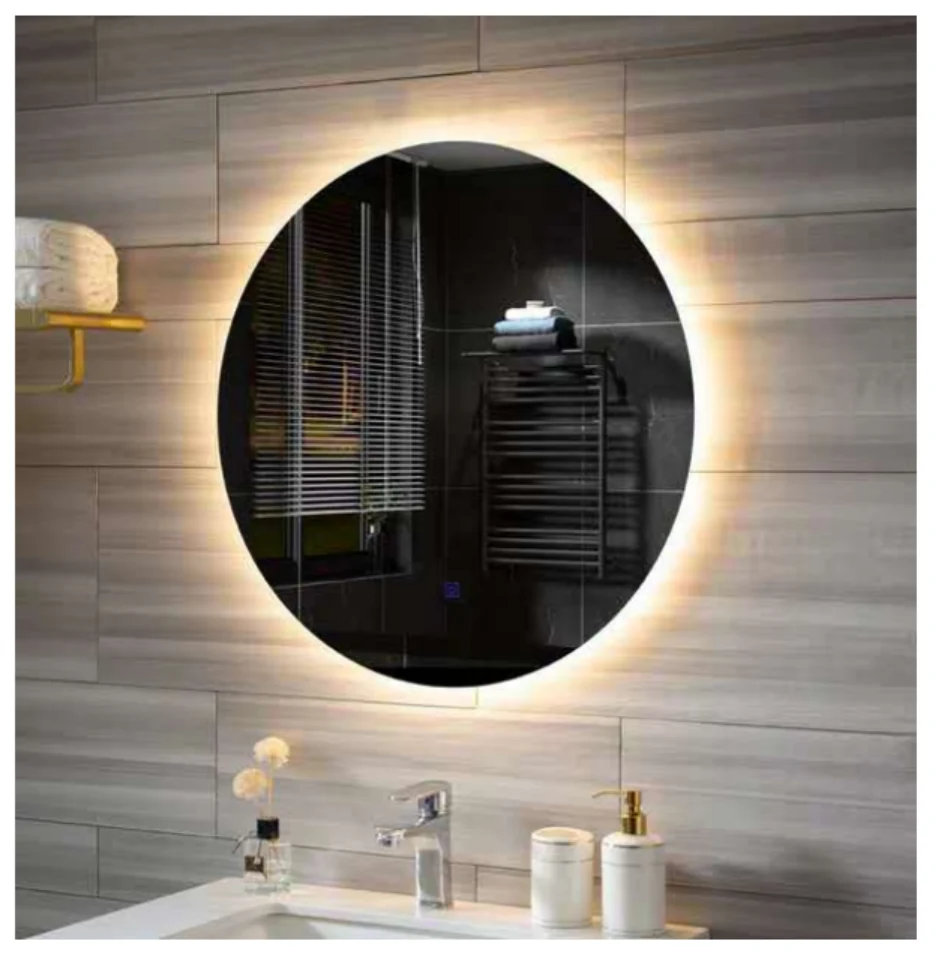
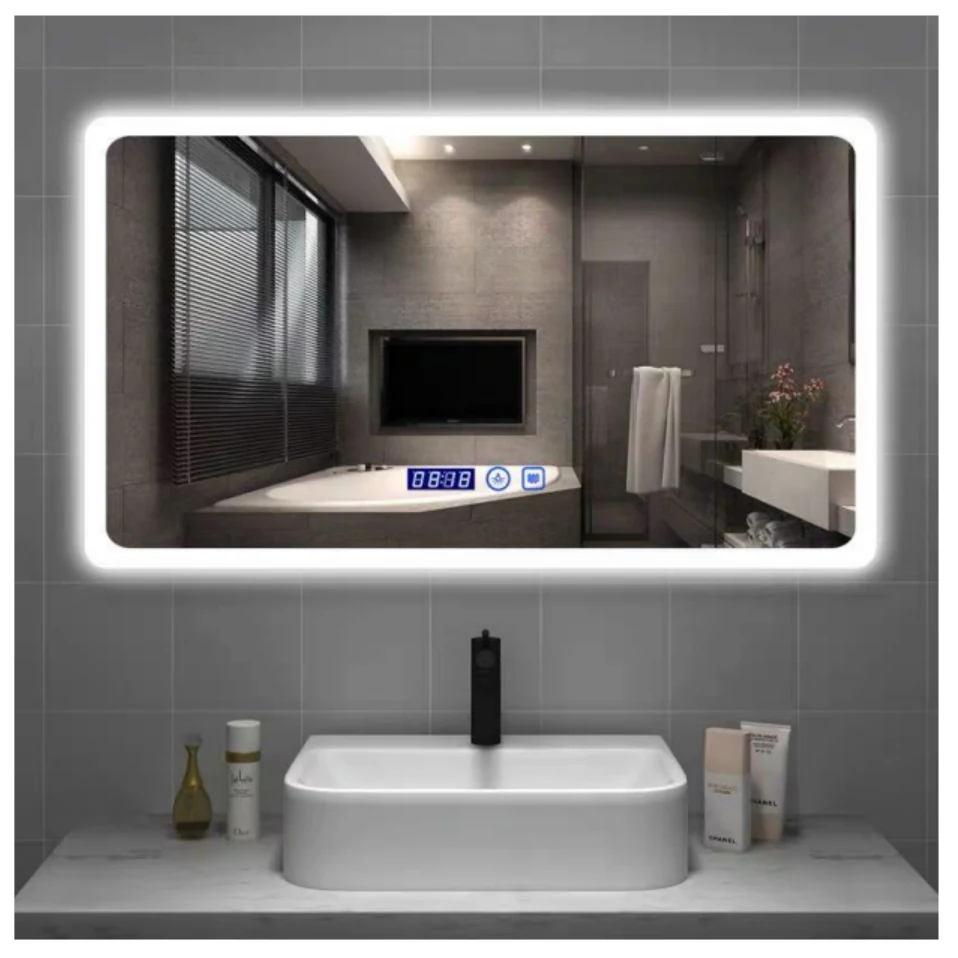
Mirror shape changes the composition. A round LED mirror can create a concentrated focal point, while a wide rectangular mirror spreads the visual line across a double vanity. The lighting plan should support that geometry rather than compete with it.
Test the Real Viewing Conditions
A hotel sample room should be reviewed in daylight, after dark and with the bathroom door open to the guest room. A showroom should test the display under its normal sales-floor lighting, not only after other lights are turned off for effect. For apartment projects, check whether repeated bathrooms have different window orientations or wall colors.
Take fixed-position photographs for the approval record, but do not rely on photographs alone. Phone cameras alter exposure and white balance. The decision team should record what they saw in person: brightness balance, wall effect, reflections and whether the controls were intuitive.
Turn the Lighting Review Into an Order Note
After approval, write down the mirror model, size, selected light configuration, control method and the room-lighting condition used for review. Keep that note with the sample record and quotation. If the interior palette changes later, flag the change rather than assuming the original lighting decision will look identical.
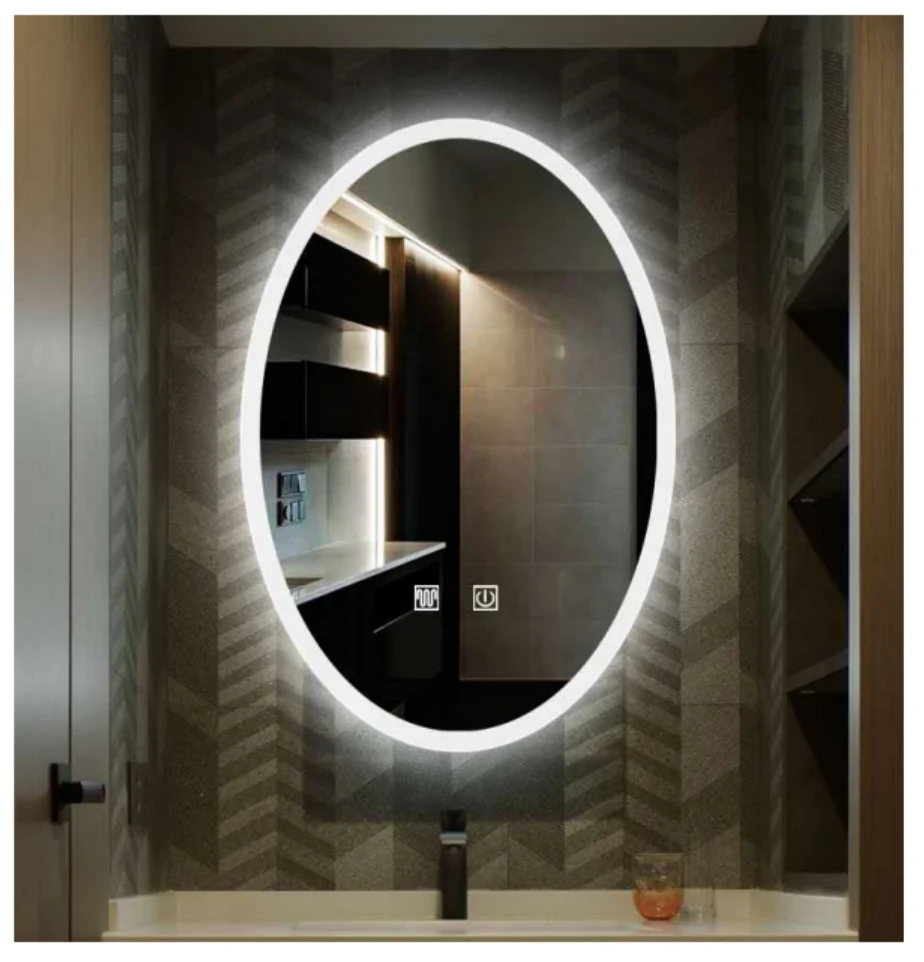
Compare oval, round and rectangular LED mirror options in the context of the full room. That small discipline produces a better scheme than choosing whichever product photograph appears brightest.