Inspect Against a Written Brief
A sample can look acceptable and still fail to answer the questions needed for an order. Before opening the carton, place the quotation, approved drawing and requested options beside the inspection area. The reviewer should know which details are fixed, which are still under discussion and what the sample is meant to prove.
Give the sample a simple reference such as model, size and sample date. Photograph the unopened carton and each stage of unpacking. This creates evidence about packaging as well as the mirror and prevents later comments from being separated from the exact unit that was reviewed.
Start with Dimensions and Visible Finish
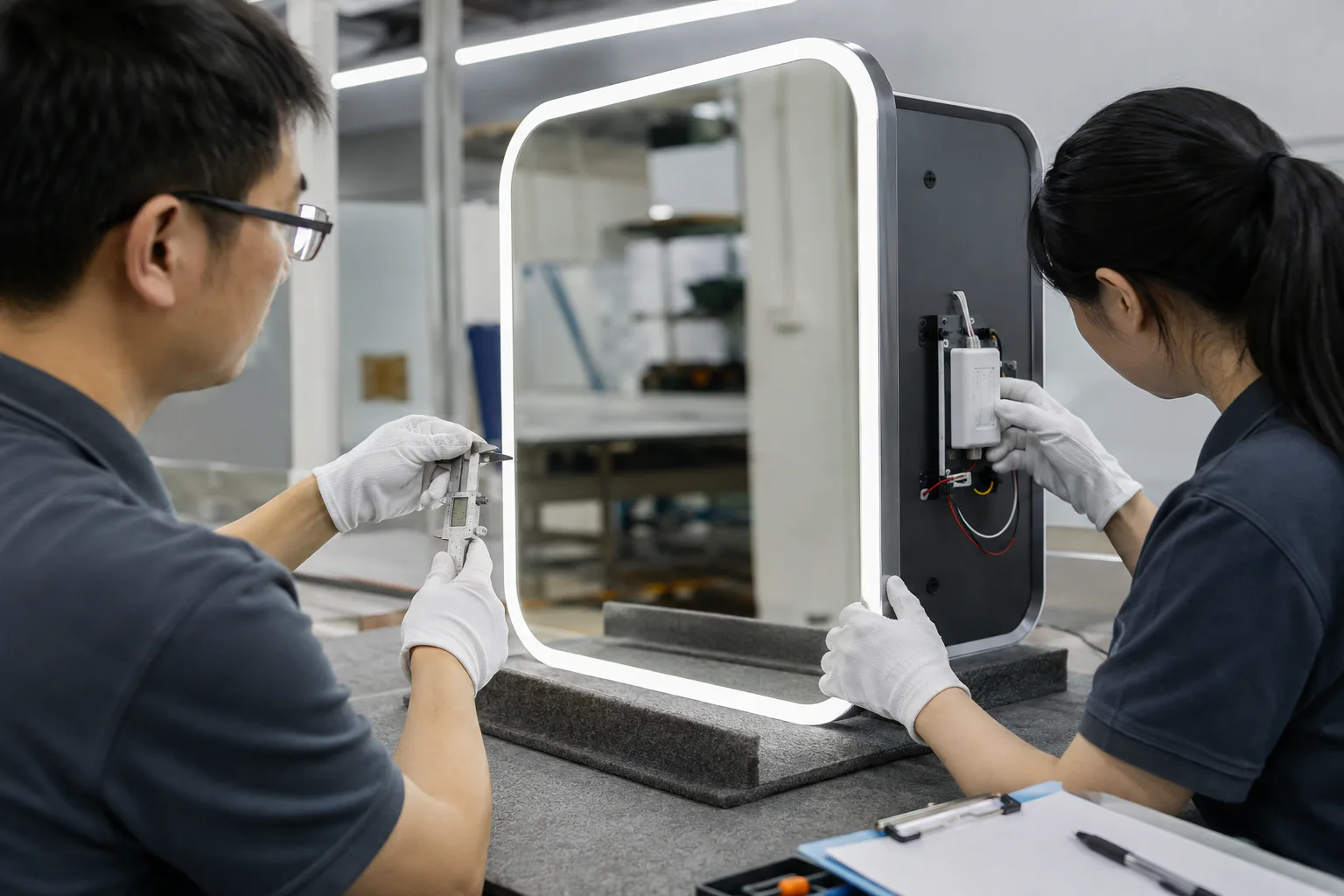
Measure overall width and height at more than one point, then compare the result with the approved tolerance. Check shape symmetry, corner consistency, edge finish and the relationship between any frame and mirror surface. View the glass from the front and at a shallow angle under diffuse light, where surface marks and edge irregularities are easier to notice.
Do not turn the inspection into a search for cosmetic perfection without context. Record the location, size and viewing distance of any concern, then decide whether it is acceptable for the intended market. A showroom display and a repeated hotel order may have different approval priorities, but the criteria should be written before production.
Review the Rear Construction and Mounting
The rear of the mirror is where installation problems often become visible. Confirm bracket position, orientation, cable exit, component security and clearance from the wall. Compare the actual back with the drawing that will be issued to the contractor. If the mirror can be mounted in more than one orientation, verify which orientation applies to the approved order.
Use the real wall type or a representative test panel for a trial hang. Check that the mirror can be placed and removed without scraping adjacent surfaces. The person conducting any electrical test should be qualified for the work and should follow the requirements of the destination market and project.
Observe Light and Controls Over Time
Switch the sample on in a normally lit room and allow it to operate long enough for a meaningful observation. Look for an even visual effect, stable operation and controls that respond consistently. Review reflections from the vanity position rather than standing directly in front only because that is where the photograph looks best.
If the order includes an agreed optional function, test that exact configuration and record the result. Avoid approving one sample and then adding several untested changes to the production order. Each change should be acknowledged in the final specification.
Make the Approval Usable
A good approval record is short enough to use and specific enough to prevent disagreement. Include photographs, measured dimensions, finish comments, control behavior, mounting notes, packaging observations and a list of open points. Mark each point approved, revise or confirm before production.
When comparing models from the LED mirror catalog, use the same checklist for every sample. Send the final model list, target sizes and inspection questions through the contact page. A repeatable method reveals more than an informal side-by-side glance.