Design the Comparison Before the Wall
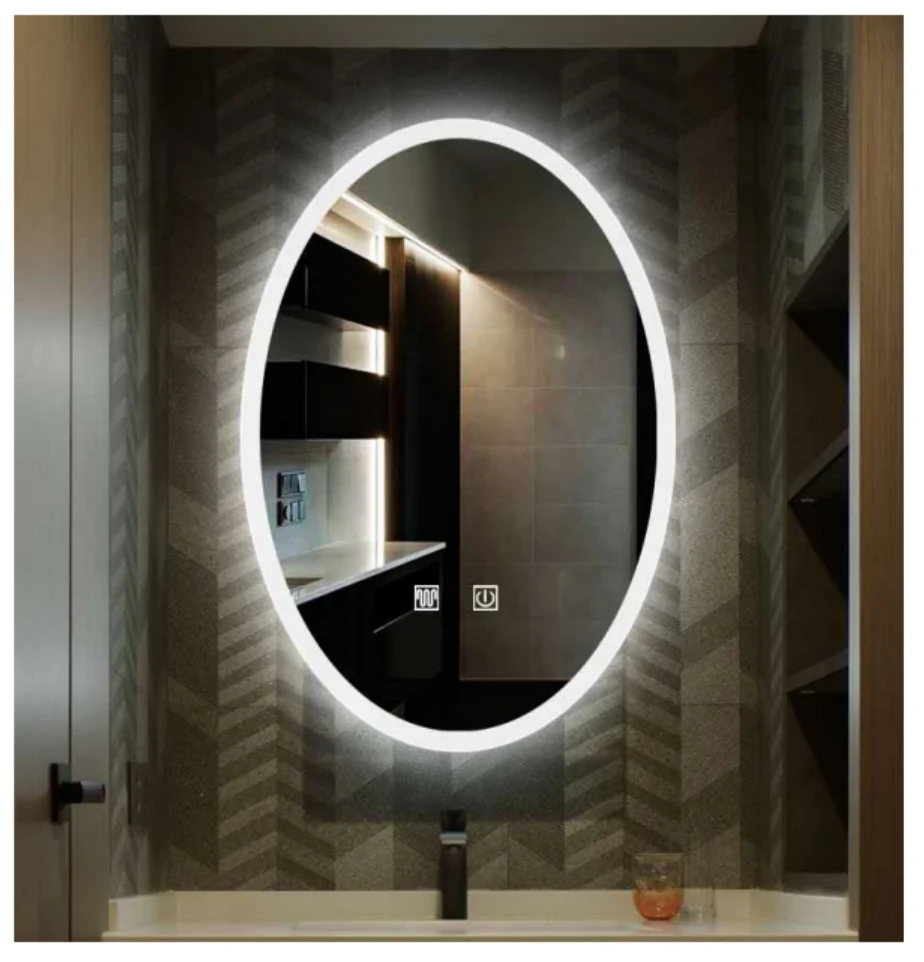
A demonstration wall earns its space when it helps a visitor understand differences quickly. Choose the questions the wall should answer: wide or vertical, framed or frameless, geometric or soft, standard stock or project order. Then select one strong example for each important direction. Six nearly identical lit rectangles make a bright display but a weak sales tool.
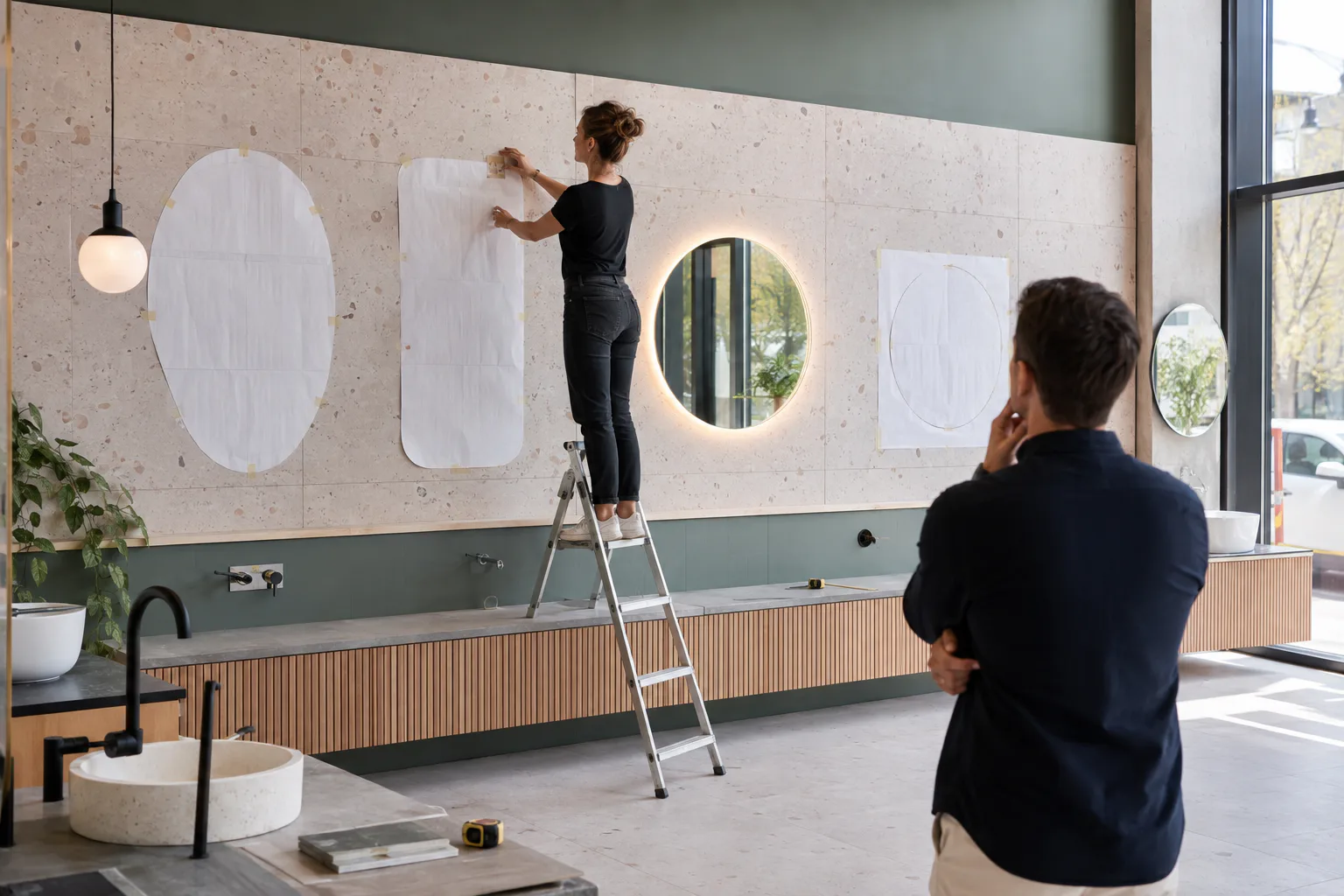
Lay out full-size paper templates before running cables. View them from the showroom entrance, consultation desk and normal standing distance. This catches crowding and awkward sightlines while changes are still cheap.
Use Realistic Spacing and Context
Mirrors should not be packed edge to edge simply because the wall is available. Leave enough space for the outline and light effect of each model to read separately. Where possible, connect one or two mirrors with representative vanity widths or finish samples so customers can judge proportion.
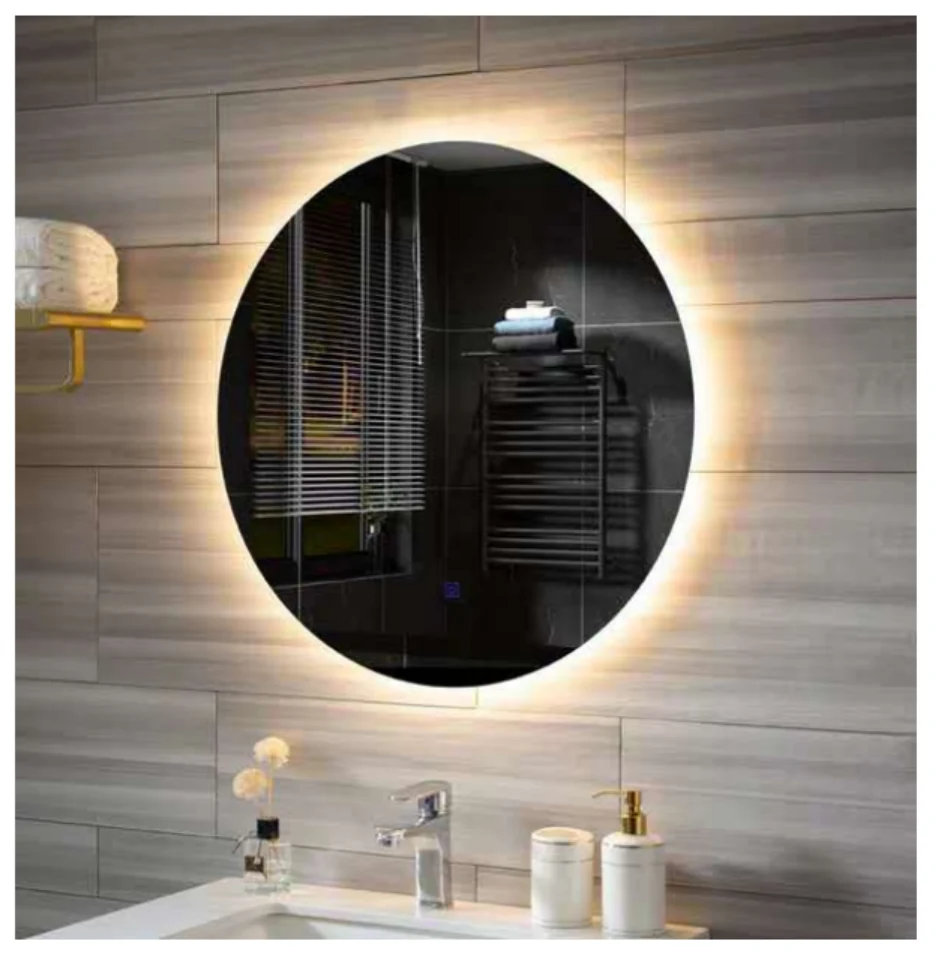
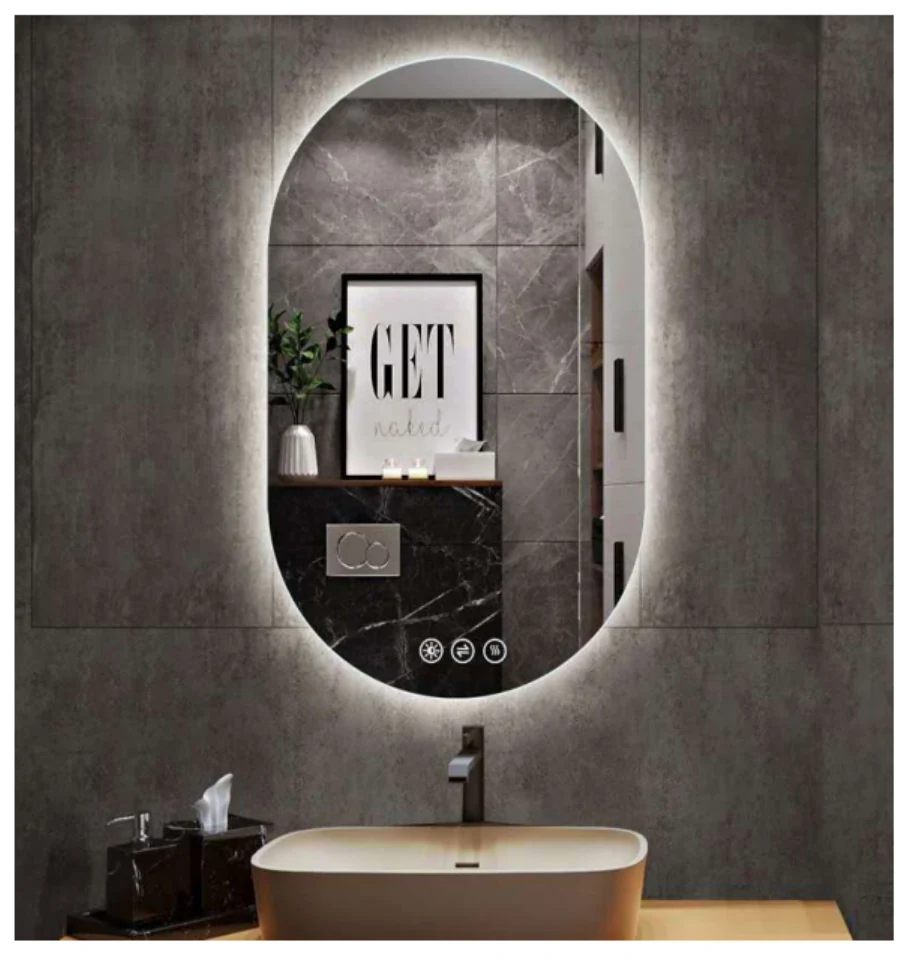
A round mirror can anchor a soft design group, while pill-shaped mirrors demonstrate vertical options for narrow cabinets. The display story should match the product range the showroom can actually quote.
Control the Room Lighting
Provide a normal showroom scene for everyday browsing and a controlled way to demonstrate individual mirrors. If every mirror is illuminated at full effect all day, adjacent glows compete and visitors struggle to see the product shapes. The ambient lighting should still make finishes and labels readable when a mirror is off.
Place switches or demonstration controls where sales staff can reach them without blocking the visitor's view. Record the intended operating routine so a carefully planned wall does not become inconsistent after staff changes.
Connect Each Display to a Model
Use a concise model card with shape, displayed size, ordering reference and the few details a customer genuinely needs at first glance. Keep the sales record behind the card more complete: product link, size options, quotation notes and the matching cabinet or project applications.
A QR code can help, but it should lead to the exact model or useful category—not a generic home page. Test every link after printing and whenever the website structure changes.
Measure What Customers Ask
For one month, have sales staff record which mirrors customers stop at, which comparisons they make and what information is missing. A model that attracts attention but creates confusion may need a better label or neighboring comparison rather than immediate removal.
Build the shortlist from the LED bathroom mirror range, then send the display wall dimensions, desired shape groups and quantities through the contact page. The best showroom wall is easy to explain, easy to update and directly connected to quotation work.