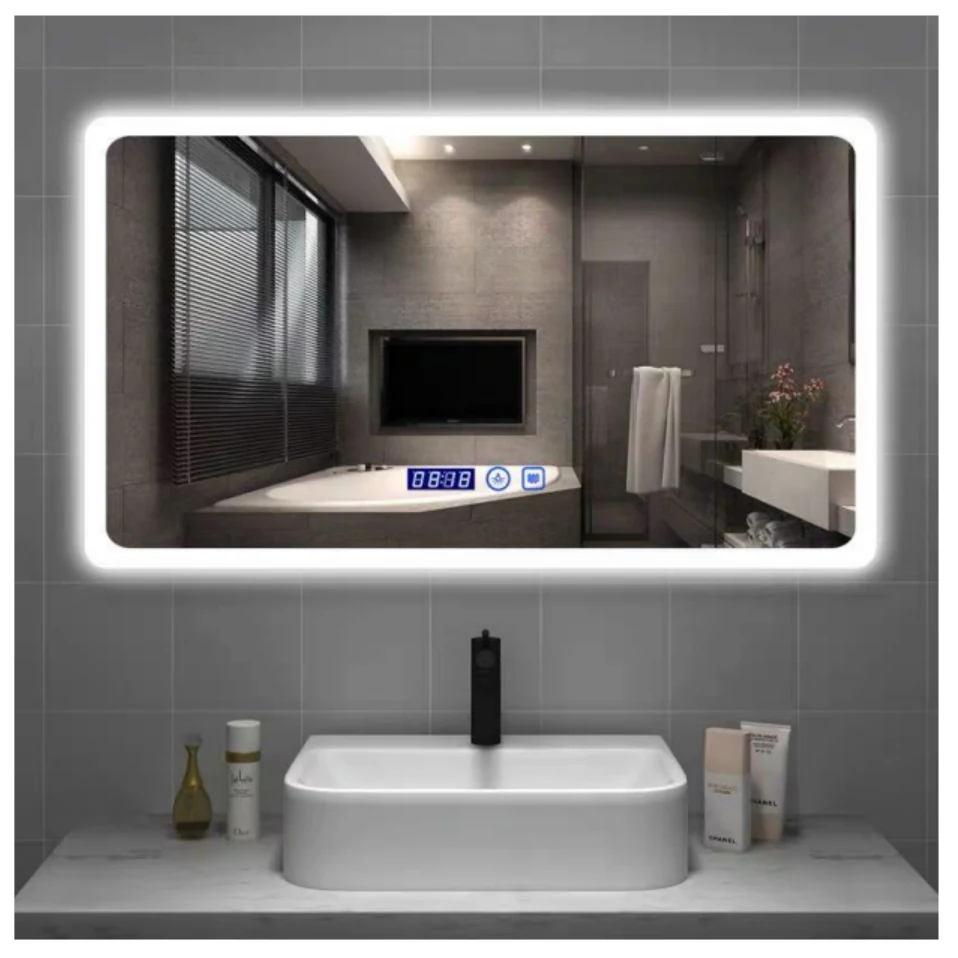

Give Every Model a Commercial Role
Variety is useful only when each model serves a customer or project need. Start with roles such as core rectangular mirror, compact vertical option, softer round or oval choice, and a framed design model. Write the intended customer beside each selection. If two mirrors have the same role, decide whether both deserve inventory space.
This approach creates a range that sales staff can explain. It also prevents the first order from being driven by a folder of attractive but disconnected product photographs.
Limit the Number of Size Families
A mixed order becomes complex when every shape also has a unique size strategy. Group models around the vanity widths and bathroom types your customers already buy. One or two meaningful sizes in a new shape may provide better market feedback than a shallow quantity across many dimensions.
Use rectangular LED mirrors for core width coverage, then add round, vertical or framed options where they solve a distinct assortment gap.
Build the Order Matrix Before Requesting Prices
Create one table with supplier model, buyer model, shape, size, quantity, sample status, carton dimensions and intended sales channel. Mark which lines are essential and which depend on price or loading efficiency. This lets the supplier answer a defined request and makes later revisions visible.
Do not compare only unit prices. A low-quantity line may add carton types, labels, spare requirements and warehouse locations. Those costs belong in the assortment decision even when they do not appear in the product price.
Check the Physical Load and Receiving Plan
Ask for packed dimensions and weights by line, then review pallet or loading assumptions with the receiving warehouse. Confirm how different shapes will be identified and whether the team can store them safely. If the order is consolidated with cabinets or other sanitary ware, share that plan early so packaging discussions use the real handling route.
Prepare the arrival inspection by model family. The receiving team should know which cartons to sample, what evidence to capture and how to isolate damage without losing the link to a particular model and shipment.
Plan the Reorder While the First Order Is Small
Decide what information will trigger a reorder: sales by model and size, showroom inquiries, project quotations, damage, returns and remaining stock. Use the same model codes in the warehouse and sales system. A mirror described differently by purchasing, marketing and warehouse staff will produce unreliable results.
Review the full LED mirror catalog with your assortment roles in hand, then send the shortlist, sizes, quantities, destination and shipping plan through the contact page. A mixed order should be diverse enough to learn from and simple enough to manage.