A Product Name Is Not Enough
Months after delivery, “the round mirror from the second order” is not a reliable service reference. A distributor or project team needs a simple way to connect the installed unit to a model, size, order and production period. Establish that identity before shipment and keep it consistent on the carton, packing list and accessible product label.
For a hotel or apartment project, add the room-type schedule and delivery batch. The building team does not need factory complexity, but it does need enough information to identify whether two visually similar mirrors are actually the same configuration.
Capture Installation Records
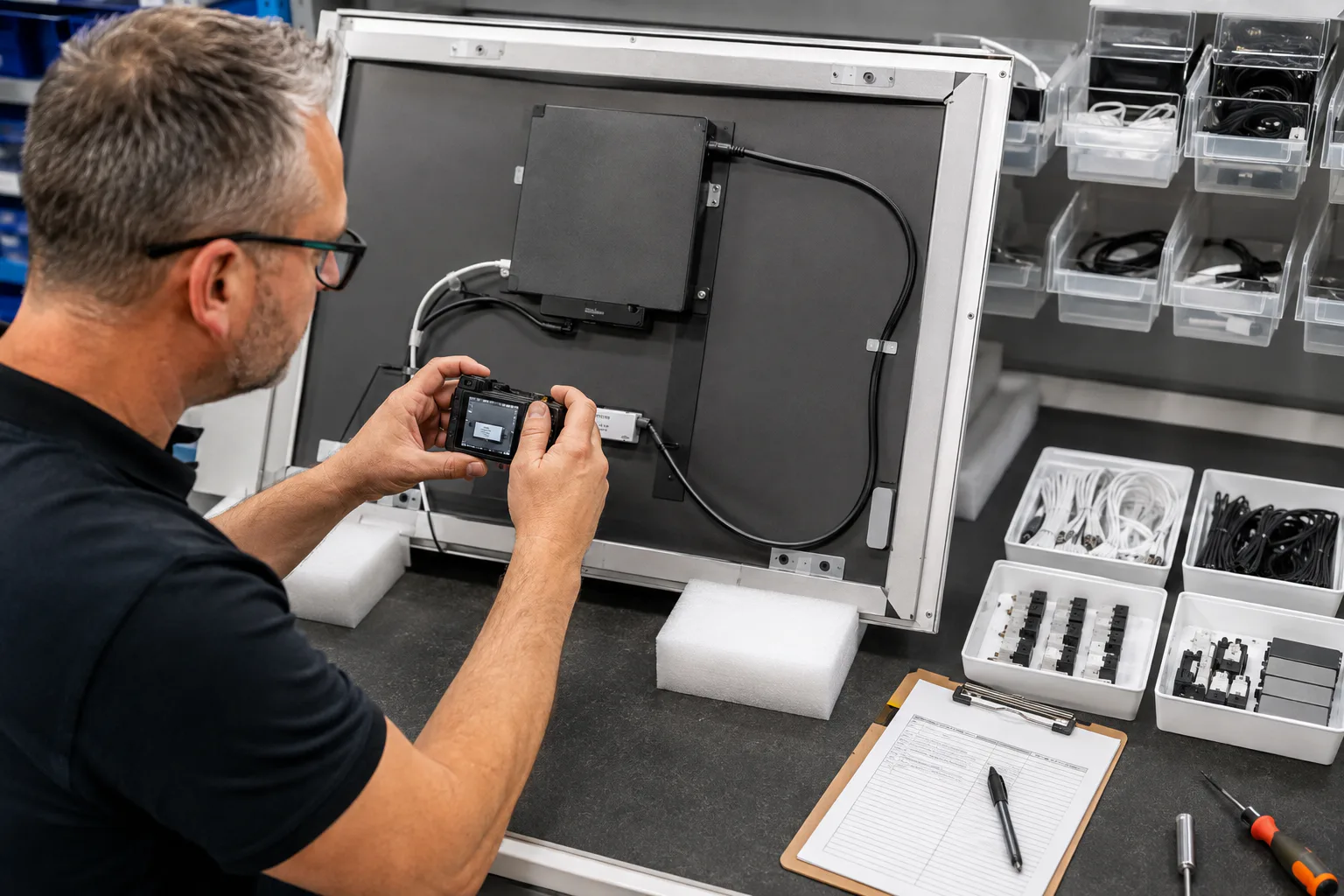
Ask installers to photograph the wall connection and bracket before hanging the mirror, then take one finished-room photograph. Name the files by project and room or unit. These images help distinguish a product question from a site condition, damaged cable, altered wall or incorrect mounting position.
The record should also note the installation date and contractor. Avoid collecting personal data that the project does not need; the purpose is product and location traceability, not surveillance.
Request Evidence That Can Be Diagnosed
When a problem is reported, ask for the model label, order reference, overall photograph, close view of the issue and a short description of what happened before it appeared. For an operating issue, a brief video can show behavior more clearly than several messages. The mirror should not be opened or electrically investigated by an unqualified person.
Use the same intake form for every customer. Consistent evidence helps a supplier compare cases and avoids losing essential details across chat messages, email and sales staff.
Plan Spares Around the Installed Base
A spare plan should reflect the number of installed mirrors, model mix, project access and the buyer's service promise. Record which service parts correspond to which configuration and how they will be identified. A drawer of unlabelled components is not useful inventory.
For long projects, review whether later phases still use the approved configuration. If something changes, update the compatibility record and inform the maintenance team rather than relying on visual similarity.
Close the Loop with Purchasing
After-sales records can improve the next order. Review recurring installation questions, transit damage locations, unclear instructions and model-identification failures. Turn each repeated issue into a specific drawing, packaging or documentation improvement instead of a general request for “better quality.”
When building a range from the LED mirror catalog, include identification and documentation in the supplier discussion. A clear after-sales trail protects the buyer's customer relationship and gives the manufacturer evidence it can act on.