Treat the golden sample as a controlled reference
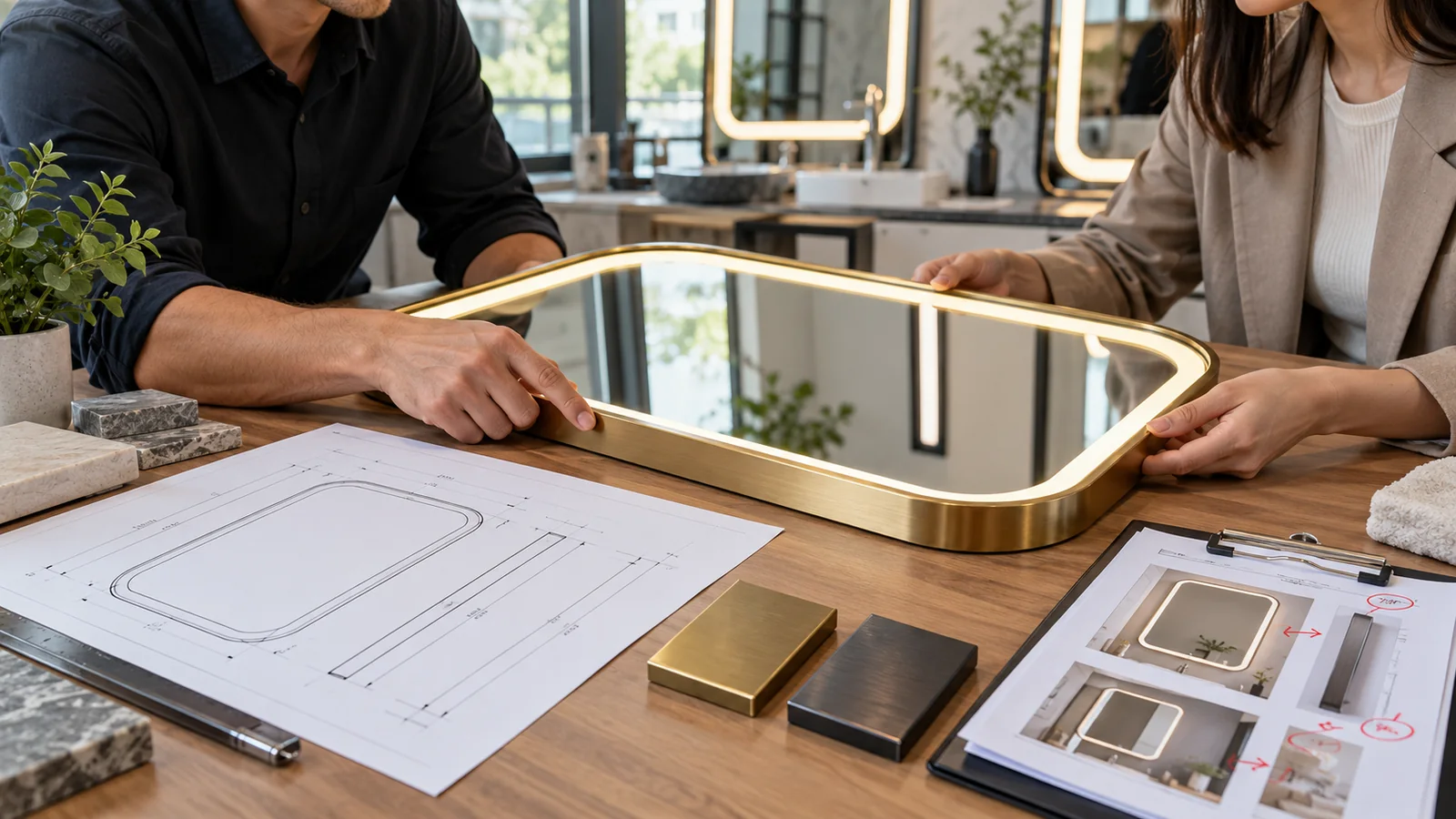
A golden sample is the physical unit both sides have approved for production comparison. It should carry a model number, sample ID, date and drawing revision. Photograph the front, rear, edges, lit condition and packaging. If the buyer keeps one sample and the supplier keeps another, label both so no prototype is mistaken for the released version.
A sample is not a substitute for a drawing. Small differences in size, driver, mounting hole or frame finish can be hard to see but matter to installation and replacement. Keep the written specification alongside the sample.
Sign off the complete configuration
Before release, approve outer size, glass and edge finish, light color and control behavior, driver input, frame or rear structure, mounting hardware, labels and carton design. Record which party reviewed each item. A hotel buyer may need the designer to accept appearance and the electrical contractor to accept the rear layout; one signature may not cover both responsibilities.
The older OEM overview explains customization choices. This production record answers the separate question of how the chosen specification is kept stable.
Make every change visible
If color, dimensions or a component changes, issue a revision with the old and new values, reason, affected models, first applicable lot and approval date. Decide whether a fresh sample is required. A verbal “same as last time except the driver” creates ambiguity when procurement, production and after-sales teams consult different files.
Do not overwrite the last approved drawing. Retain superseded versions with a clear status so a repeat order can be checked against what was actually shipped. If a component substitution becomes necessary, ask for its specifications and any related electrical documentation before accepting it.
Keep a batch trail
For each purchase order, keep the quotation, released drawing, sample ID, bill of materials, change approvals, inspection record and carton artwork. The buyer should retain the same revision identifiers the factory uses. This makes a later replacement or claim much easier to diagnose.
When requesting an OEM quotation, provide the current specification and identify unresolved decisions instead of asking a supplier to infer them from a photograph. Explore existing shapes as starting points, then send the controlled document package to the team.
A revision log that survives a repeat order
A compact log can carry columns for date, model, old revision, new revision, changed field, reason, sample impact, approval and first applicable purchase order. A frame-color change belongs there even if it appears cosmetic; the next batch may otherwise revert to an earlier finish. A driver change belongs there even if its outside appearance is identical.
When placing a repeat order, quote the approved revision and attach the last accepted sample record. Compare the new quotation and component list with the earlier one before asking production to proceed. If the physical golden sample is damaged or no longer representative, retire it explicitly and approve a replacement; do not leave two differently configured units bearing the same “approved” label.